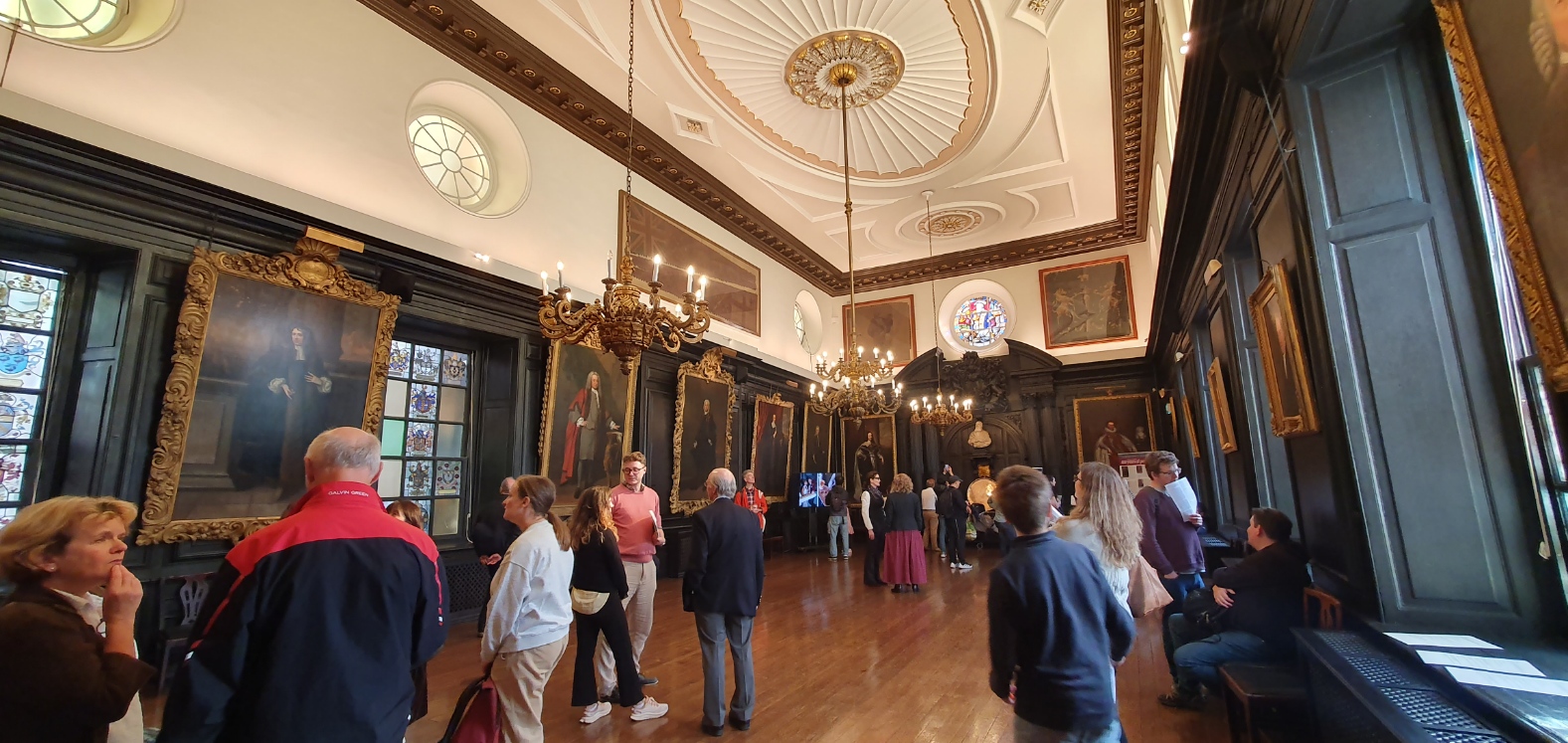
The City of London is ancient stonework behind glass and air conditioning. East of modern London, the ancient area known as The City has always been associated with trade and industry, giving a history of innovation. To be the City, the “Square Mile” must connect its history with the modern economy, with an efficiency that keeps out of the way of curious passers-by.
This is why skyscrapers are built around medieval churches, and why so many basements are filled with Roman remains. For one week of the year, these places open up as part of Open House London, a festival of the often unseen spaces across London.
This runs from oddball homes, hidden on anonymous estates, last seen on old episodes of Grand Designs, right up to the door of Number 10 Downing Street. In east London, metal patination studios let locals in on their manufacturing process. Out west, the redevelopment of Kensington Olympia exhibition venue gave the public their first look at what was to come. In between, the City Livery Companies open their doors.
Livery companies are the guilds that built the city, and have a current role in its administration. Their halls were once essential conduits for industry, but now fill a mostly ceremonial role. On a sunny September Sunday, I walked the quiet back lanes of City to find some remnants of its former glory.
Apothecaries’ Hall
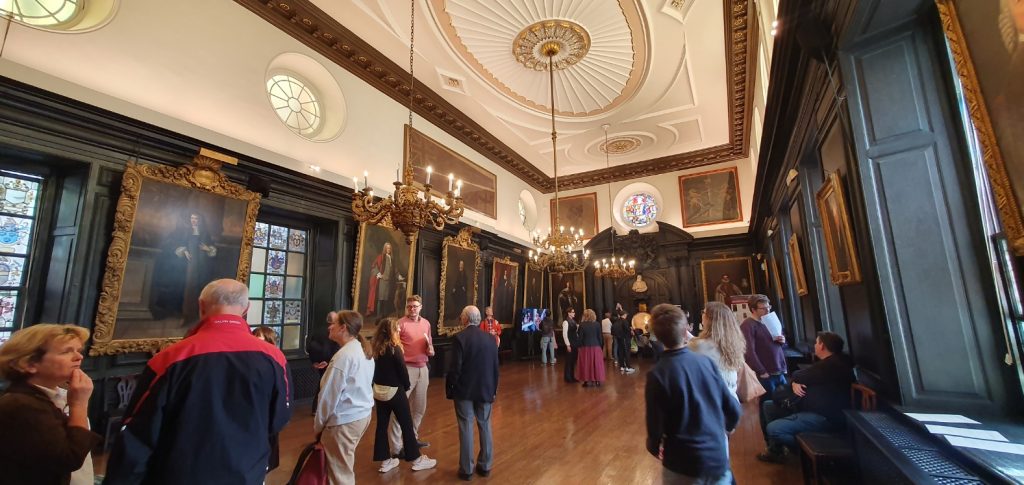
Up a cobbled street near Blackfriars Station, Apothecaries’ Hall quietly faces onto a busy pub and a train line. Behind its thick wooden doors lies proof that medical spaces have some inexplicable soothing aura, as a definite calm hangs in the air of the whitewashed courtyard.
Here you can find the Worshipful Society of Apothecaries, as well as their “housemates”, the Chartered Companies of Spectacle Makers and Brewers. Not every company has its own hall, but every hall is a monument to tradition, and the society of Apothecaries occupies the oldest one standing.

On stepping through the door, the members of the society are quick to tell you that this is still a working company, with duties in training and examining medical practitioners across the world. While it now does this through academia, these were once the halls that every doctor in London passed through in order to earn their qualifications.
The work of a healer is a customer-focussed job. While other societies have been more secluded, Apothecaries’ Hall used to have a store-front pharmacy, with medicines manufactured on site until 1922. Since the pandemic, the society has recreated this old medicine shop as it was when serving Victorian commoners.
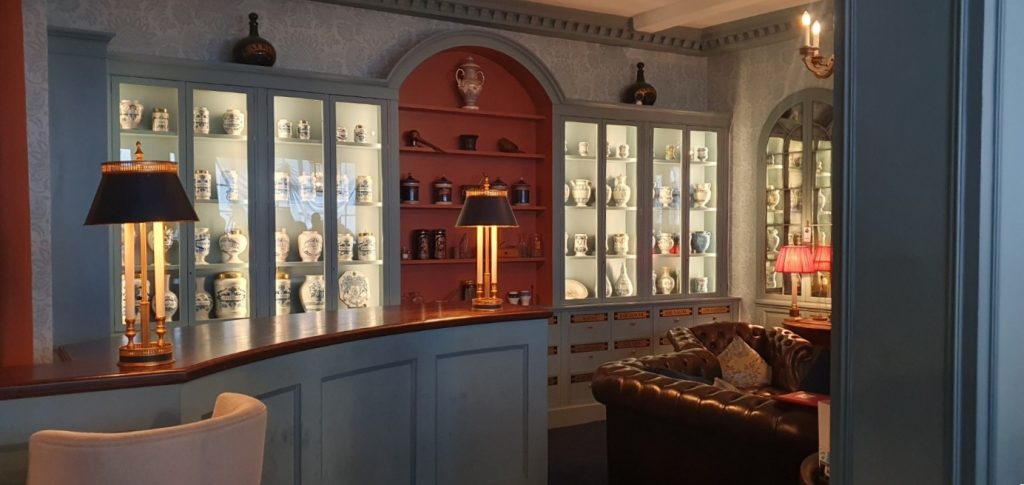
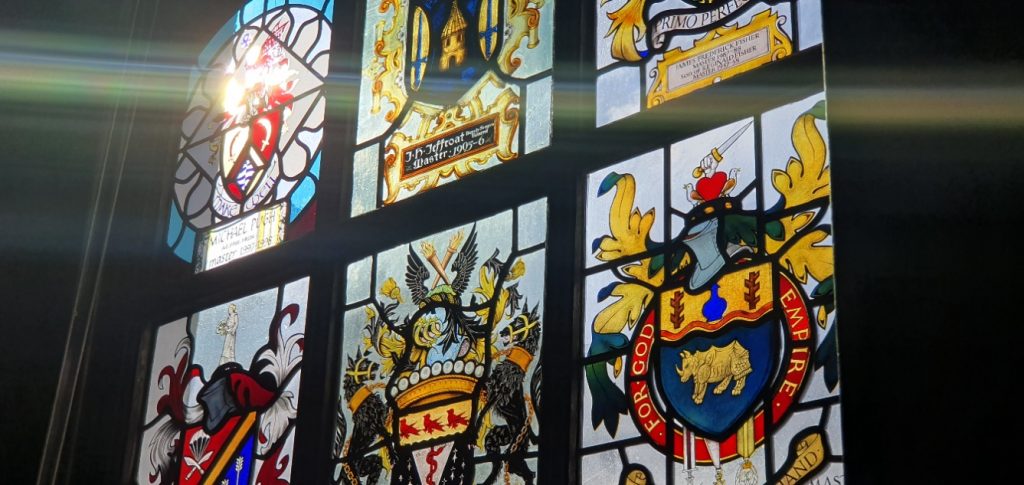
The Society of Apothecaries was originally spun off from the Society of Grocers, as medicine evolved from a goods trade into a precise science. This was a time when healing was not far from superstition, and the society chose the rhino as its emblem because of the supposed healing properties of rhino horn. Since the artist who made the Society’s symbols could never have seen a rhino, today many of the Hall’s fittings display a slightly misshapen creature, looking something like an armoured boar.
Upstairs, display cases hold early medical equipment, some indistinguishable from torture devices. Early microscopes and jars labelled “LEECHES” decorate one room, while another is watched over by the painted eyes of the society’s former leaders. Each has their own story, but the best-known former member must be Agatha Christie, who worked as a pharmacist before writing her many murder mysteries. Poet John Keats was also passed through the hall when he qualified as a doctor.
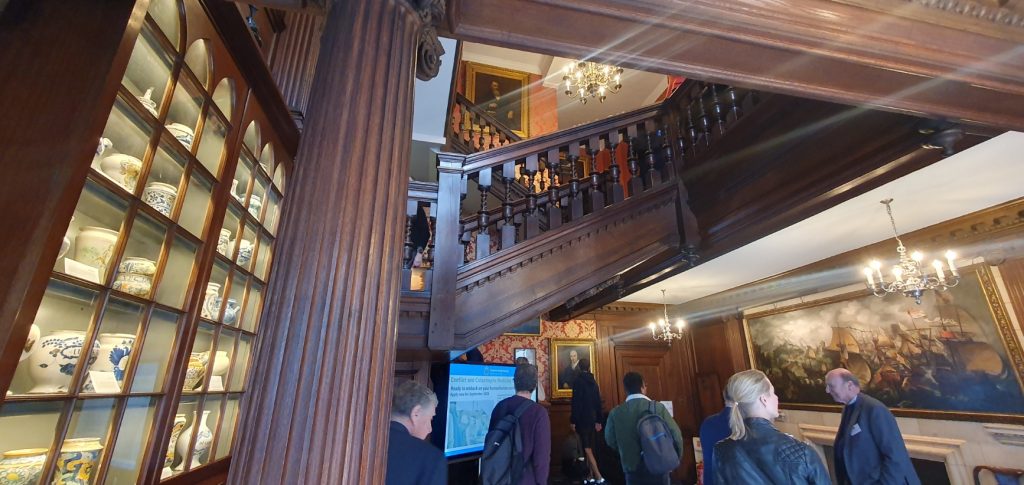
While the Society of Apothecaries plays a larger role today than most other societies, along with all of its peers, it is now far smaller than it used to be. Members join to spend time on good causes, to represent their profession, and to socialise within their trade. These halls used to define standards and practices for medicine throughout the world; today they do so in a much more subtle way.
Stationers’ Hall
The word stationery, I was told, comes from the Victorian traders selling paper and quills to the public of Ludgate Hill. Most market stalls had to move around London to find new demand for their products: there are only so many people and so little cash to spend.
But around St Paul’s Cathedral, the intersection of the Church and the courts meant there were always someone in need of paper and ink in the area. Their sellers could remain there as regular stations at the market, and the trade becoming stationary. Eventually pens and paper became known as stationery, and Stationer’s Hall remains around the corner from St Paul’s today.
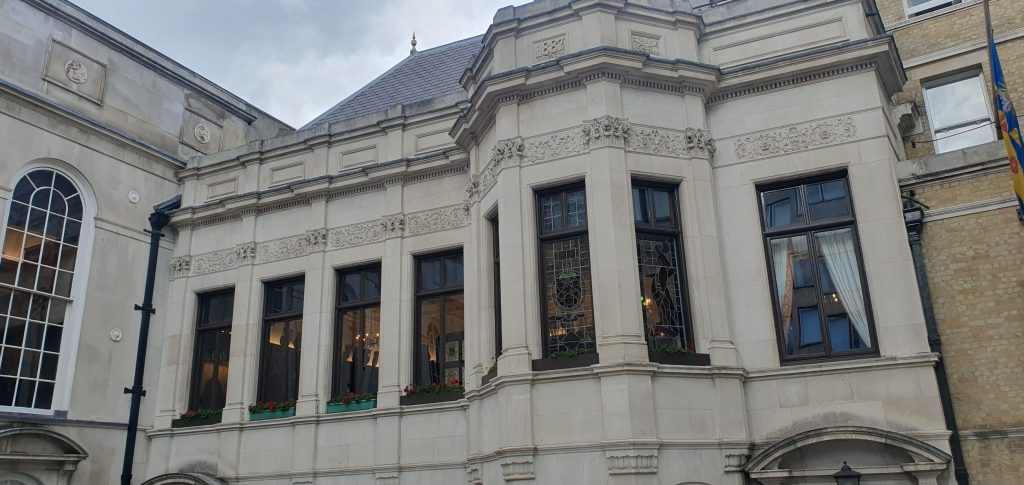
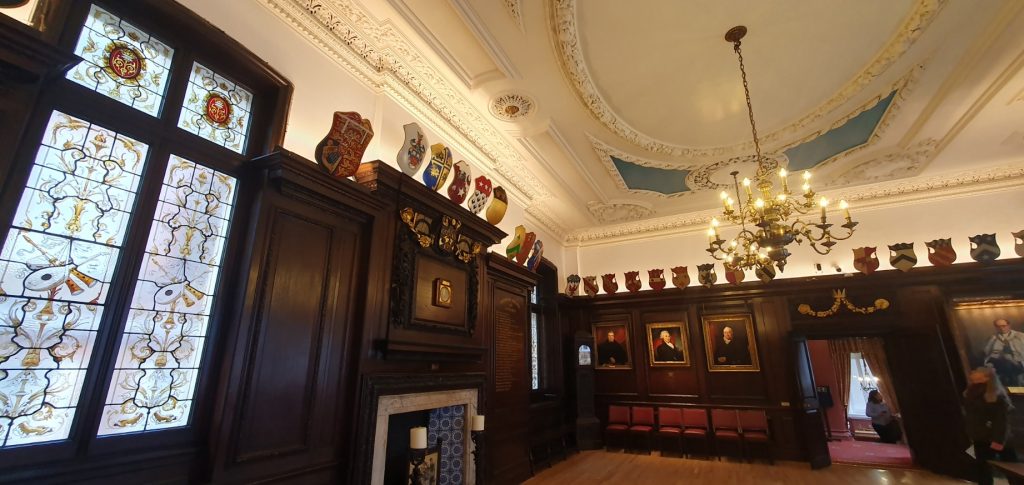
Today the members of Stationers Hall are papermakers and printers, but also writers, illustrators, publishers, literary agents, journalists, web designers, and many others involved in the presentation of the written word. Despite this evolution, the hall is just as traditional as any other, displaying the coats of arms of those that have passed through the building in its time.

The building is slightly younger that Apothecaries’ Hall, after both burnt down during the Great Fire of London in 1666. This was the first copyrighting library in the world, holding a copy of every book published in the UK for hundreds of years.
For Open House, a range of bookbinders and restoration experts greeted guests curious about their work. The day had the feel of a coffee morning, hosted by volunteers from the society keen to show the comradery of the Company and the work of a modern Stationer. While one of the world’s oldest dictionaries was on display, the walls also displayed the names of some the Company’s modern press backers.
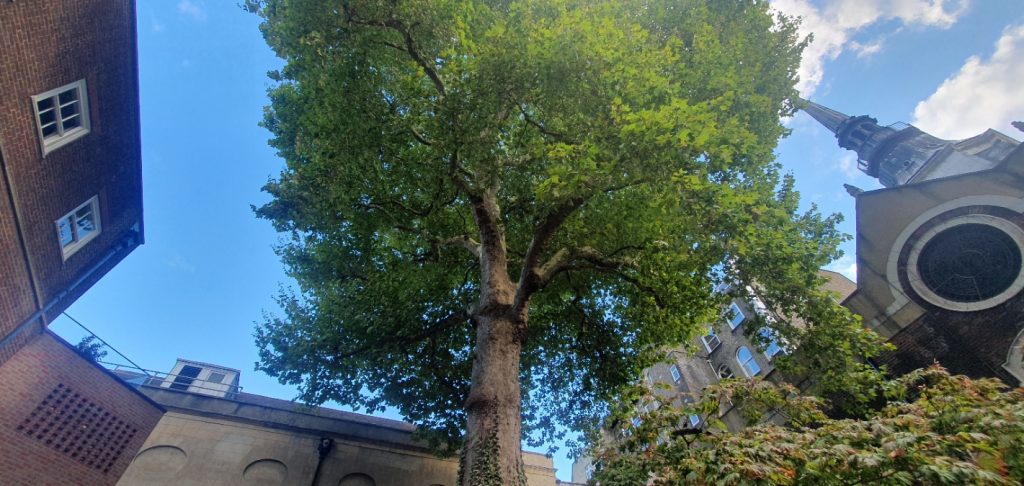
Behind the main hall, a window faces out onto a courtyard made to seem small by one of the most magnificent trees in London. This single giant shelters the surrounding buildings making the adjacent church of St Botolph Without Ludgate seems quaint. This beautiful plant shifts perspective, both for the writers passing through the hall and for the wedding guests squeezing into a photo as they cross the courtyard for their reception.
Stepping out of the halls on a Sunday afternoon, the streets that gave London its prosperity were quiet in a way rarely found inside the M25. While 670,000 people work in the City of London today, only 9,000 live there, so weekends tend to offer a quieter time to navigate the ancient city streets. After two minutes’ walk from the hall and a quick stop at a cafe, the steps of St Paul’s Cathedral offered an unusually quiet seat to take it all in.
Most people only see the Cathedral as an island in a busy city, constantly in motion. But on a Sunday, a hush descends on this area like you might find in a county town or a more scenic corner of England. On this Sunday, seeing the wooden roots of the City in the forest of industry, how London came to be makes a little more sense.
Apothecaries’ Hall offers a virtual tour, while tours of Stationers’ Hall can be pre-booked for £20. Both offer venue hire for events.